- Building to $1M in Israel
- Posts
- Founder-Led Branding 101 @ Google for Startups with Yaffa Abadi
Founder-Led Branding 101 @ Google for Startups with Yaffa Abadi
Some concrete tips and value for founders, marketing peeps and everyone in between who want to scale trust online to accelerate their GTM in 2025.

Andrew Jacobson
June 12, 2025
A couple months ago, I got this text from a Series B fintech founder I work with:
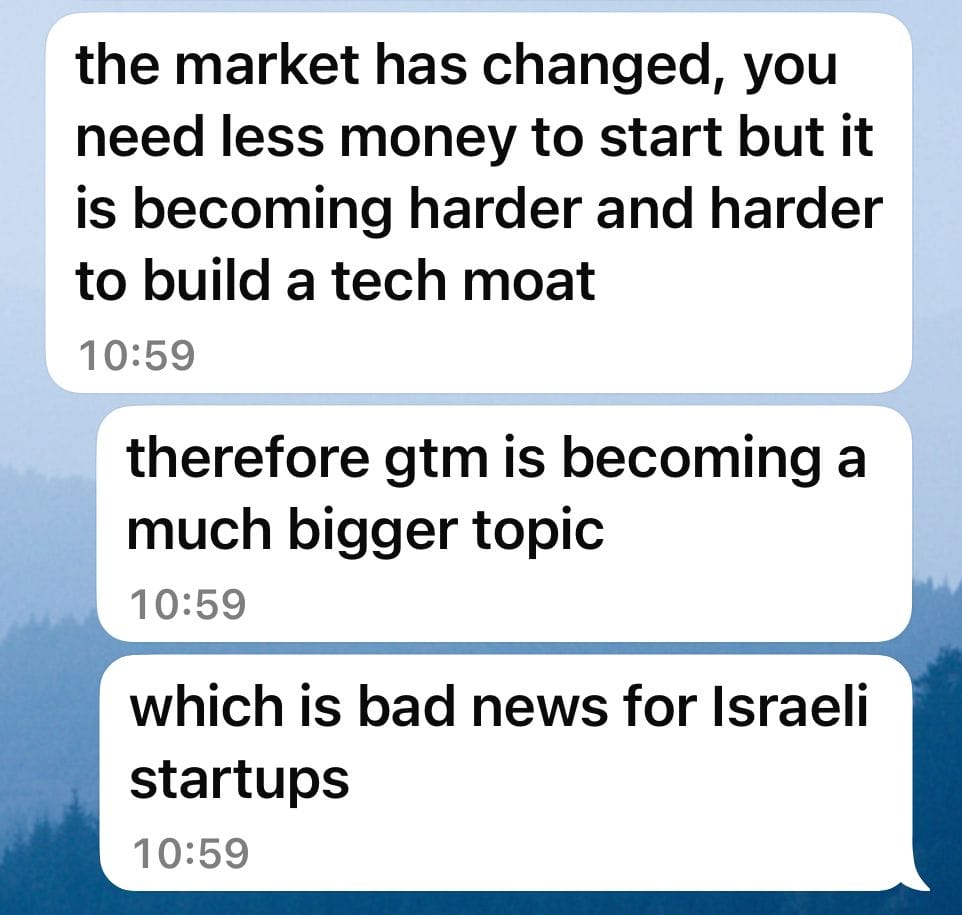
I stared at that message for a while. Because he's absolutely right.
With tools like Cursor and Lovable, anyone can spin up a decent product in weeks. The technical advantages that used to take years to build? They're getting commoditized, fast.
So if it's not your product that creates sustainable differentiation anymore, what is it?
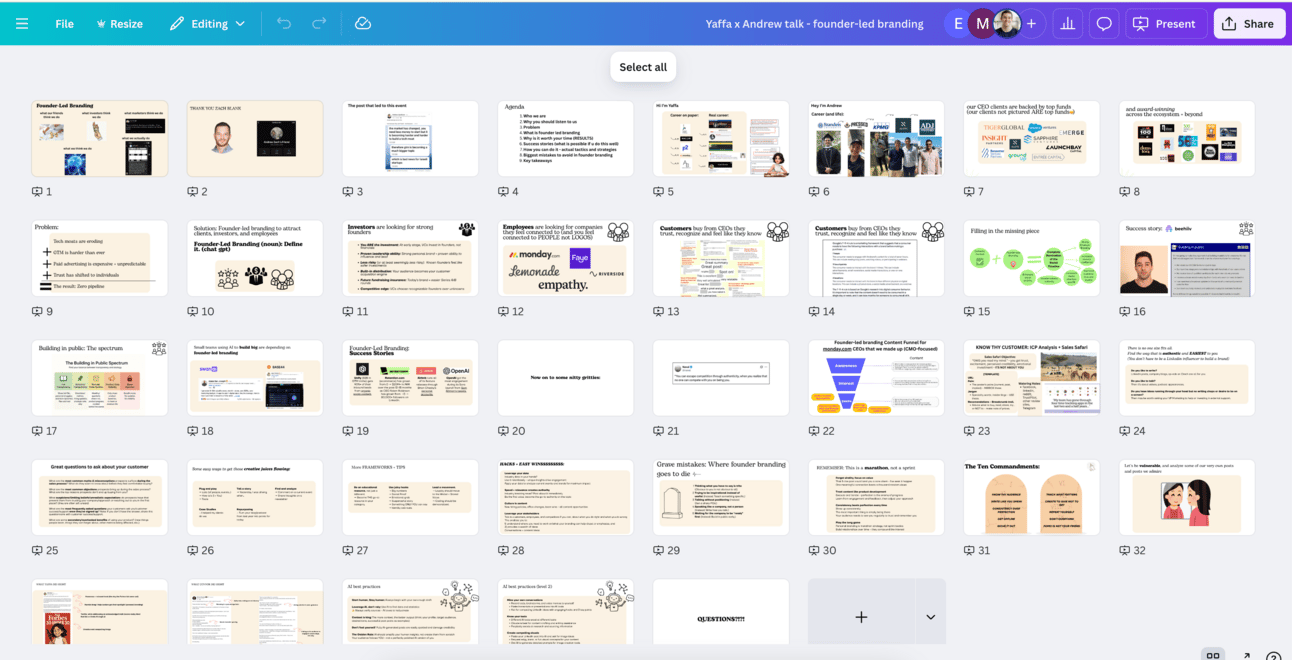
That question led me and my friend Yaffa Abadi to give a talk at Google for Startups last week about founder-led branding. Not because we love talking about LinkedIn strategy (well…we do), but because we think this might be the most important moat you can build right now as an early-stage startup.
Here's What's Actually Happening
Trust is moving from companies to individuals. There’s a lot of data to back this up. You can check out Derek Thompson’s writings in The Atlantic for more.
Buyers follow a founder online, learn from their content, and start trusting their perspective. Whether its Tyler Denk talking about newsletters, or Ryan Peterson explaining shipping logistics - there’s a lot of excellent founders creating real moats with founder-led brands right now.
And this isn't just touchy-feely brand stuff. Tyler Denk of Beehiiv shared some of the benefits he’s experienced from founder-led branding that blew my mind:
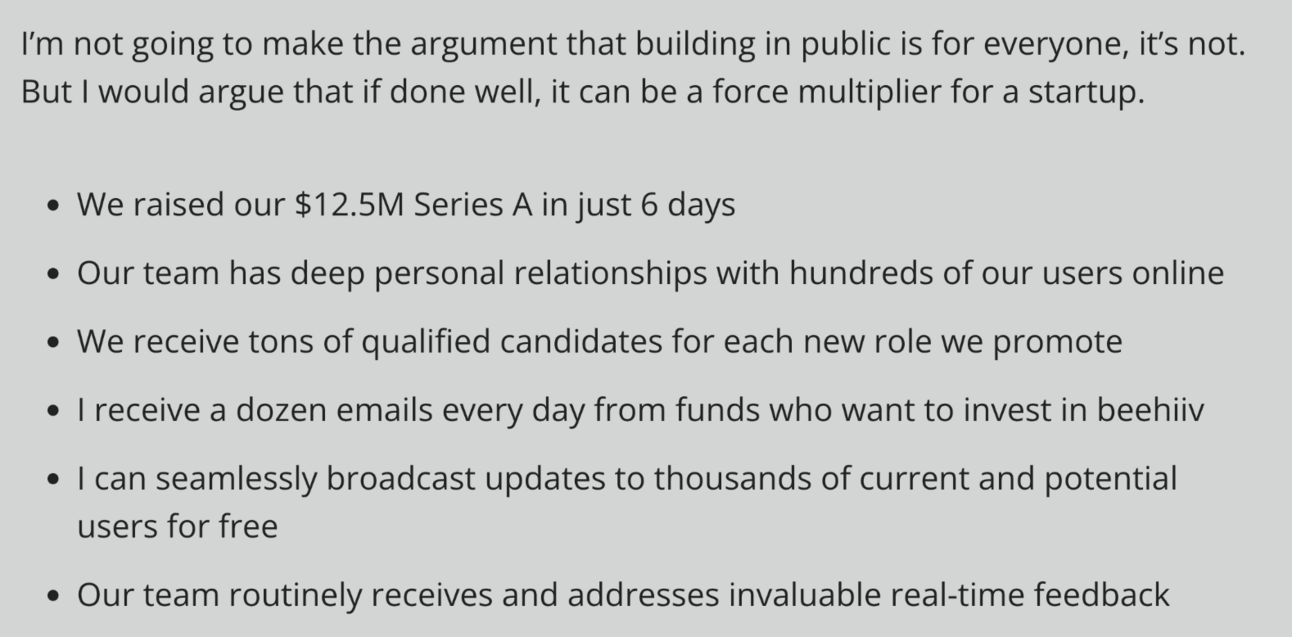
Of course, none of that would be possible if he built Beehiiv in stealth.
The Problem Most Founders Have
But here's where most founders screw this up completely.
They treat their LinkedIn like a billboard. Constant posts about their latest webinar, their conference appearance, their product update. It's just advertisement after advertisement.
And people hate that. You hate that. I hate that.
What people actually want is content that's entertaining and useful. They want to follow someone who makes them smarter about their job, not someone who's constantly trying to sell them something.
Think about it from your customers' perspective. There's this framework called Google's 7-11-4 that suggests consumers need seven hours of engagement with your brand, across 11 different touchpoints, in four different locations before they buy.
Seven hours. Eleven times. Four places.
That's way more than you think, right? But it explains why consistency and volume matter so much. Every time someone scrolls past your post (even if they’re a silent lurker and don't engage) that's another touchpoint building familiarity.
The Question That Changes Everything
So how do you create content that doesn't suck?
I have one question I ask before posting anything: "Am I the only person who can say this?" Or at least, am I one of the only people who can say this?
That question forces you to dig into what's actually unique about your experience. What proprietary data do you have? What insights come from being in the trenches with customers? What conversations are you having that other people aren't?

With AI making generic content easier than ever to produce, authenticity is becoming your biggest differentiator.
How to Actually Understand Your Customers
But here's the thing - you can't be authentic to your audience if you don't really understand them.
Most founders think they know their customers, but they're usually wrong. You know what your customers tell you in sales calls, but that's different from what they're actually thinking.
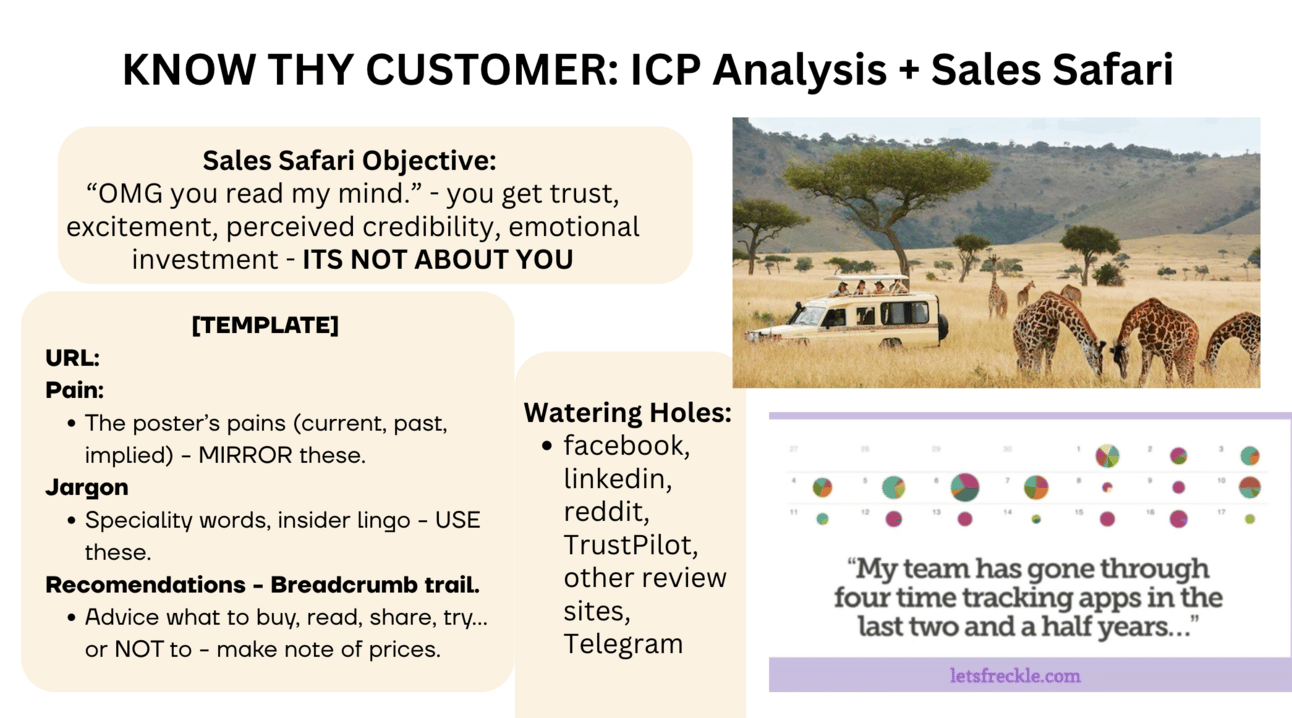
So here's what I do: I go on what I call a "Sales Safari."
I find the watering holes where my customers hang out online (Reddit, Trustpilot, LinkedIn groups), wherever they're complaining or asking questions naturally. Then I just scroll and take notes.
Not fancy notes. I literally open TextEdit and write down:
What exact words are they using?
What are they frustrated about?
What advice are they giving each other?
For example, if you're selling to banks, go read HSBC reviews on Trustpilot. You'll learn more about banking pain points in 30 minutes than in months of customer interviews.
The goal is to get your ICP to read your content and think: "Oh my god, you read my mind."
When that happens, you get trust. You get credibility. You get emotional investment. And that moves people down your funnel faster than any sales pitch ever could.
A quick primer from our talk:
The Stuff That Actually Works
Once you understand your audience, here's what I've seen work consistently:
Start with broad, valuable content. Not about your product - about your industry. If you run a project management company, write about what it takes to scale globally. If you're in fintech, share your POV on market trends. Aim to become THE go-to resource in your vertical.
Then get more specific. Share lessons from building your platform, how you launch new features, how you think about product-market fit. This is where education meets demonstration.
End with proof. Case studies, customer wins, specific outcomes. Help prospects imagine their success story.
But through all of this, remember: you're teaching, not selling.
The 3 Biggest Mistakes in Founder-Led Branding
I see the same mistakes over and over, even from the most impressive CEOs. Don’t make them!!!
Mistake #1: Thinking your insights are obvious. You're so deep in your industry that you forget how interesting your perspective is to everyone else.
That "obvious" point you're hesitating to share? Share it.
Mistake #2: Trying to sound inspirational instead of useful. Skip the motivation quotes. Teach something specific that helps people do their jobs better. It’s okay to be niche. It’s good to be niche.
Mistake #3: Waiting until your company is "ready." Start now. The best founders are building distribution while they build product.
Three Tactical Things You Can Do This Week
1. Do a Sales Safari Go to where your customers are complaining online - Trustpilot, Reddit, LinkedIn comments. Take notes on their exact language, their pain points, their recommendations. Use their words in your content. When prospects see their own jargon reflected back, trust builds instantly.
2. Start Recording Everything Your customer calls, your team brainstorms, even yourself thinking out loud. Feed these transcripts to Claude or ChatGPT with this prompt: "Based on this transcript, give me 10 LinkedIn post ideas with compelling hooks and 3-5 bullet points for each." You'll get 2-3 genuinely good ideas from every session.
3. Lead a Movement, Don't Sell a Product Instead of "Here's our platform that does X," try "We believe Y should be democratized." Position yourself as driving change in your industry, not just offering another solution.
The Real Point
Technical moats are eroding. But you have something no competitor can copy: your authentic voice, your unique perspective, your relationships with customers.
The founders who figure out how to turn that into content, who become the go-to resource in their vertical, who build trust at scale, those are the ones who'll win when everyone else's technical advantages level out.
Your biggest competitive advantage isn't sitting in your codebase. It's sitting in your head. Stop keeping it to yourself.
P.S. Happy to share the full deck from our Google for Startups presentation if you respond to this email and tell me what you’re looking for most!